
In recent years, 3D printing has transitioned from a niche technology to a vital component across various industries. As businesses and consumers alike begin to recognize the benefits of this innovative method, 3D printing services are becoming increasingly accessible. This article delves into the transformative potential of 3D printing services, illustrating their applications, advantages, and the future outlook of this exciting technology.
Understanding 3D Printing Technology
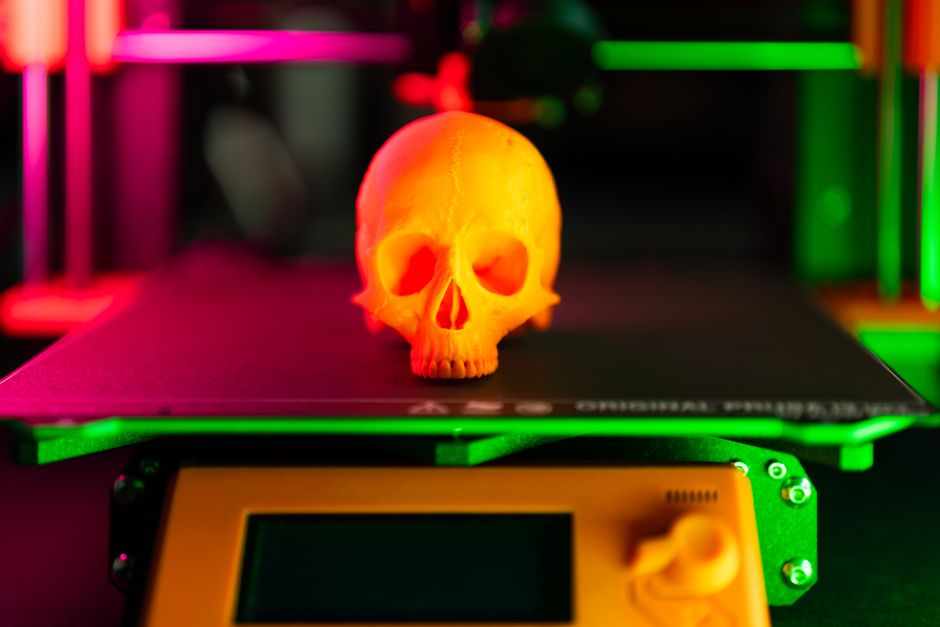
3D printing, also known as additive manufacturing, involves creating three-dimensional objects from digital files. The process typically includes laying down successive layers of material until the desired object is formed. This technology can utilize a variety of materials, including plastics, metals, ceramics, and even biological materials.
The origins of 3D printing date back to the early 1980s when Charles Hull invented stereolithography, the first commercial 3D printing technology. Since then, the field has evolved rapidly, with numerous techniques now available, including selective laser sintering (SLS) and fused deposition modeling (FDM). Each method has unique advantages and is suited for different applications.
Applications of 3D Printing Services
The applications of 3D printing services are vast and varied, impacting numerous sectors. In the healthcare industry, for example, 3D printing is revolutionizing how medical devices and prosthetics are manufactured. Custom implants can be created to fit individual patients perfectly, improving outcomes and reducing recovery times.
In the automotive and aerospace industries, companies are utilizing 3D printing to produce lightweight components that enhance fuel efficiency. For instance, General Electric has implemented 3D printing in the production of fuel nozzles for jet engines, resulting in parts that are 25% lighter and five times more durable than traditional components.
Furthermore, the architectural sector has adopted 3D printing to create intricate models that aid in design visualization. Architects can produce detailed scale models quickly and efficiently, allowing for better client presentations and project planning.
The Advantages of Utilizing 3D Printing Services
One of the most significant advantages of 3D printing services is the ability to reduce production waste. Traditional manufacturing techniques often involve cutting away material from a solid block, resulting in substantial waste. In contrast, 3D printing creates objects layer by layer, utilizing only the necessary material, which is a more sustainable approach.
Additionally, 3D printing enables rapid prototyping, allowing designers and engineers to create and test multiple iterations of a product quickly. This speed fosters innovation, as teams can refine their designs based on real-time feedback without the lengthy lead times associated with traditional manufacturing processes.
Moreover, the customization capabilities of 3D printing are unmatched. Businesses can offer personalized products tailored to individual customer preferences, enhancing customer satisfaction and engagement. An example can be seen in the fashion industry, where designers are experimenting with 3D-printed shoes that can be customized for fit and style.
The Future of 3D Printing Services
The future of 3D printing services is promising, with continuous advancements in technology and materials. As the technology becomes more refined, it is expected that the range of materials available for 3D printing will expand, including new composites and bio-inks for medical applications.
Furthermore, the integration of artificial intelligence (AI) and machine learning into 3D printing processes will enhance efficiency and precision. AI can optimize designs and predict potential failures, leading to more reliable end products.
As 3D printing services become more mainstream, it is anticipated that costs will decrease, making the technology accessible to smaller businesses and even individual consumers. For those looking to explore these possibilities, seeking out reliable 3D printing service providers will be crucial.
Conclusion
In conclusion, 3D printing services are reshaping the landscape of manufacturing and design across multiple industries. With their ability to reduce waste, enable customization, and accelerate production times, they are set to play a pivotal role in the future of technology. As advancements continue to unfold, the potential applications of 3D printing will only expand, offering exciting opportunities for innovation and creativity.
